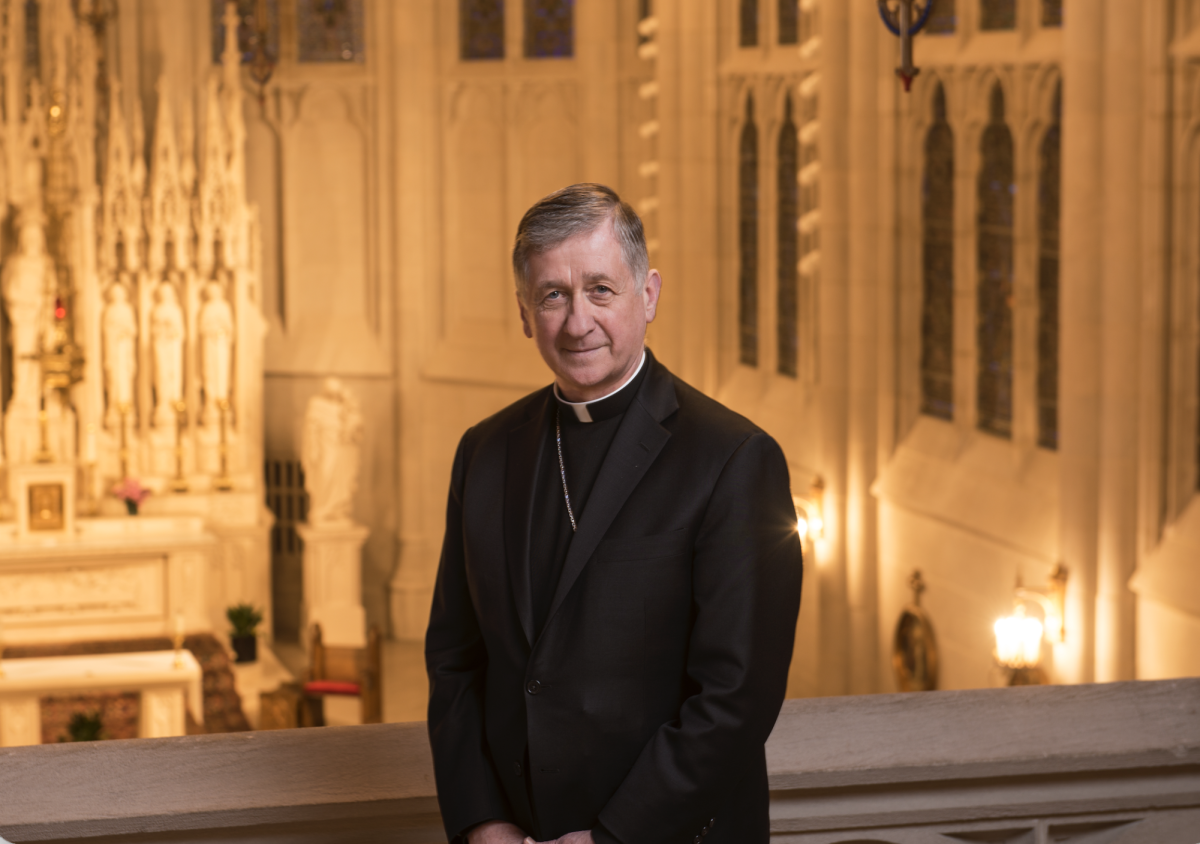
Cardinal Blase Cupich, the Archbishop of Chicago since 2014, is a dedicated supporter of the efforts of the Congregation of St. Joseph, especially of the Sisters’ service to education, social justice and spreading their mission of loving the dear neighbor without distinction.
Cupich may have a personal soft spot for the Sisters, because he himself was educated by religious women: the Benedictine sisters in Omaha, Nebraska. He still sees clearly the special gifts they instilled in him and how they influenced his calling.
“Their approach to education inspired me to really love learning,” said Cupich in a recent phone interview. “These women dedicated their lives to lifelong learning – that is really their whole life. They instilled in us that same love.”
While the CSJ Sisters no longer primarily serve as classroom teachers, their mission is reflected in their sponsorship of Nazareth Academy’s foundational pillars of scholarship, service, spirit and unity. The Sisters’ work is also seen through the dedication of the lay faculty, staff and administration who support the mission of the Congregation in their daily work.
While it is true that fewer women are entering religious life in America today, it does not mean that the lasting effects of the Sisters’ work will see a parallel decrease. Cardinal Cupich argues that preserving the legacy of these women is just as important as increasing vocations to religious life.
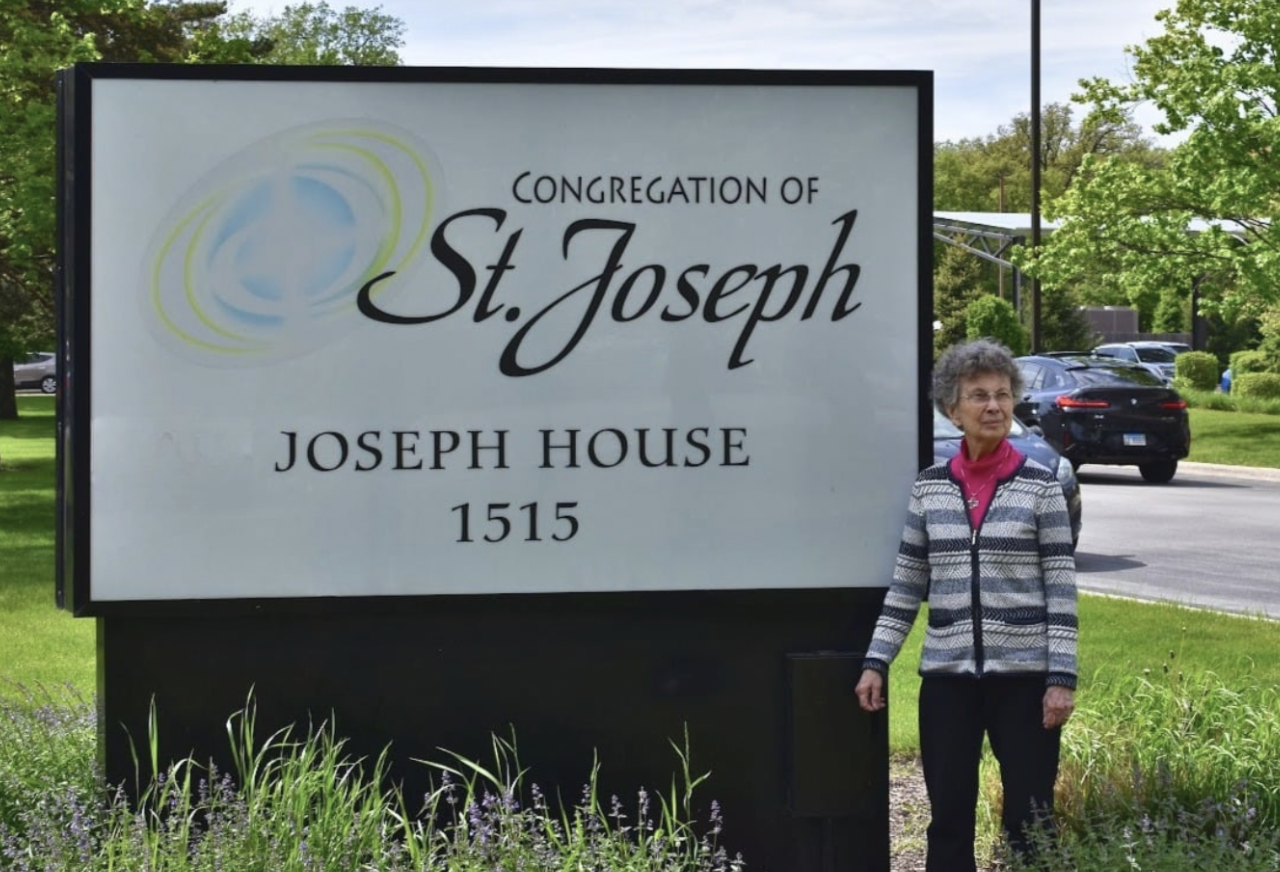
(Damian Vega)
Sister Pat Bergen, CSJ, agrees that the mission is bigger than the number of Sisters. Every associate, every alum, every employee who learns the CSJ values, every student who walks out of a school like Nazareth and carries that sense of communion into the world, knows that they, too, are all part of it. “That’s much, much bigger than the Sisters alone,” Bergen said.
While Cupich is realistic, he still has faith in future generations entering into a vocational journey. “I have not given up on promoting vocations to the priesthood and religious life,” he said, “simply because I care about your generation.”
His challenge was direct: somebody has to accept the baton. Someone has to be there to serve the next generation as the Sisters who have served generations before.
Sr. Pat’s own calling to her vocation came one day when she was in a welfare office and was suddenly overcome: “I experienced being loved just as I was, from head to toe, that God loved me infinitely,” she said. She looked around at the other people in that office and knew God loved them just as much. She said, “And in standing in that line, I told God, I will get all the help I need so I can come back and help them realize you love them. That was my real call.”
She left the congregation at one point. But when she came back, they took her back immediately and made her the formation director. She has loved every minute of her life since that moment. She stated that she has been able to accomplish so much through fulfilling her mission. And indeed she has: she has spoken at the United Nations, she has been an educator, she has fought against human sex trafficking, she has worked at the border supporting migrants, and so much more – and her work is far from over.
“The way I love God is by loving all of these revelations of God, all of the neighbors,” Bergen said. “The more I love them, the more I love God, because they reveal God to me. So, there’s no separation between God and people, God and creation.”
For students at Nazareth Academy and CSJ schools across the nation, the Sisters’ message isn’t about joining a convent. It’s about paying attention. “Pay attention to what gives you not happiness, but joy,” Sr. Pat said. “Joy comes from the inside. Talk to the Spirit about what can nurture that joy in you and follow that path.”
Cardinal Cupich framed it similarly, pointing at the Latin root of “Mass,” missia, meaning “to be sent.” “Every time you go to Mass, you should consider the possibility that God is opening a pathway for you to be sent into the world,” he said. “Your life is not an accident. It is not a mistake.”
The question is whether the next generation of men and women knows what they have been handed. And how they will carry that mission, that joy, that baton forward.